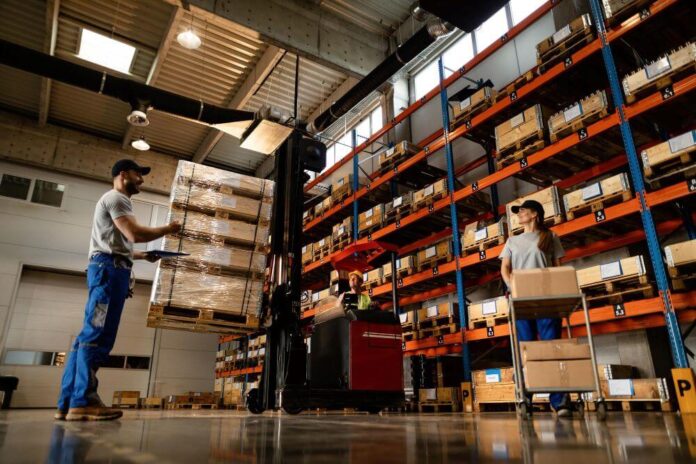

Across the UAE, supply chains run at a demanding pace. Import activity stays high. Retail patterns change quickly. Buyers expect correct orders and fast delivery. In this scenario, warehousing carries real commercial weight.
A warehouse is no longer just a place to keep goods. Contract logistics warehousing brings storage and stock control. It also assures seamless order handling and transport planning into one coordinated operation. So, the warehouse defines how efficiently the entire supply chain performs.
More Than a Storage Facility
Every warehouse process starts with receiving goods. Shipments arrive. Teams check quantities and conditions. Items are recorded immediately before being placed into storage.
Where products sit inside the facility is not random. Fast-moving goods are positioned closer to dispatch zones. Slower stock is arranged to protect space and flow. Clear layout planning reduces unnecessary handling and keeps movement steady.
The goal is simple. Keep goods moving without confusion or delay.
Inventory as a Financial Asset
Inventory is tied directly to working capital. So, excessive stock hugely strains the cash flow. Likewise, too little inventory can disrupt service commitments.
Strong visibility over inventory levels protects both sides of that balance. Tracking systems are in place. They show:
- What is available
- What is moving
- What needs replenishment
Managers can react early instead of correcting mistakes later.
Some products require additional care. Temperature-sensitive items must remain within controlled ranges. Regulated goods demand proper documentation and checks. Warehousing safeguards product integrity while maintaining accountability.
When handled carefully, contract logistics warehousing improves accuracy and limits avoidable loss.
Order Fulfillment and Customer Confidence
Order fulfillment defines customer experience. Each order moves through picking, verification, packing, and dispatch.
Efficient picking routes reduce travel time inside the facility. Clear quality checks prevent shipment mistakes. Coordinated dispatch planning aligns outbound movement with transport schedules.
Reliable processing supports faster delivery and fewer returns. In the UAE’s competitive market, this reliability influences long-term relationships.
Managing Cost Through Location and Design
Warehouse placement affects overall logistics spend. Facilities near ports, highways, and distribution corridors reduce transit distance. Consolidation of shipments lowers freight charges.
Some operations rely on centralized storage to maintain tight oversight. Others spread inventory across regions to improve delivery speed. The structure depends on service commitments and customer geography.
Inside the facility, space planning improves. Organized slotting and efficient material flow reduce wasted time. These adjustments support cost stability without expanding physical footprint.
Flexibility in a Changing Market
Demand levels in the UAE often fluctuate due to trade cycles and promotional activity. Fixed infrastructure cannot always respond smoothly.
Outsourced arrangements provide flexibility. Storage capacity adjusts when volumes rise. Labor scales during peak periods. Businesses avoid unused overhead during slower months.
In this model, contract logistics warehousing supports operational balance while allowing companies to focus on core priorities.
Technology and Continuous Oversight
Modern warehouse operations rely on system integration. Warehouse management platforms track stock in real time. Barcode systems improve traceability. Data reporting supports forecasting and replenishment planning.
Performance indicators, such as order accuracy and stock turnover, are reviewed consistently. Adjustments are made based on measurable outcomes.
Technology enhances discipline. It does not replace it.
A Strategic Role in 2026
Warehousing now influences service standards, cost management, and expansion planning. It supports smoother supply chain coordination and reduces operational risk.
In the UAE’s fast-moving commercial environment, structured execution matters. When managed with precision, warehousing becomes more than storage. It becomes a strategic advantage embedded within the supply chain through disciplined contract logistics warehousing.