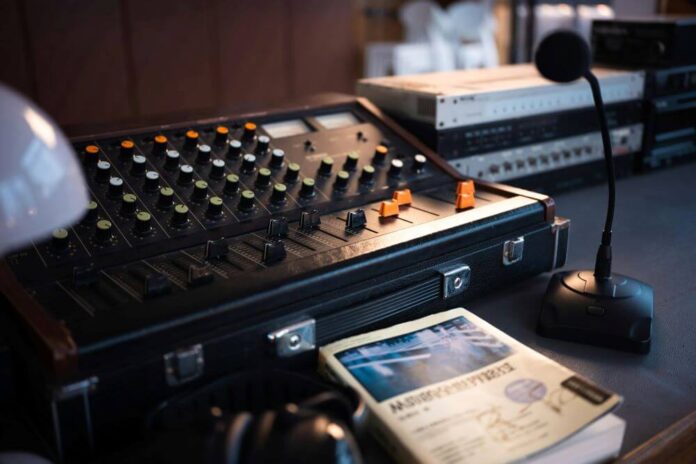

Selecting proper broadcasting equipment is among one of the most crucial business decisions.
It’s the difference between crisp clarity on every screen… Or a stuttering, stuttering mess that drives away customers. Whether it’s a hotel, arena or hospital, commercial broadcasting has one mission:
- Deliver crisp video
- Deliver reliable audio
- Deliver it to every screen, every time
Here’s how to pick the right gear…
What you’ll discover:
- Why Commercial Broadcasting Is Different
- The Must-Have Equipment For Commercial Setups
- How To Choose The Right Digital TV Signal Distribution Gear
- Common Mistakes To Avoid
Why Commercial Broadcasting Is Different
Commercial broadcasting is not the same as the setup you have at home.
A home system might have one TV and one cable box. A commercial system might have 50, 500, or 5,000 screens — all at the same time. All must receive the same signal.
That is a completely different challenge.
The need to be specific is fueling the rapid expansion of the global broadcasting equipment market. According to data, the market will increase from USD 6.3 billion in 2024 to USD 11.1 billion by 2034.
Here’s why commercial setups are harder:
- More screens = more signal loss without the right gear
- More viewers = more pressure on uptime
- More locations = more chances for things to break
That is why the equipment you choose matters so much.
The Must-Have Equipment For Commercial Setups
Okay, now to the gear you’ll actually use. Get these two pieces working, and everything else will be a breeze.
Encoders
Encoders compress the raw video and audio signal into a format that can be transmitted over your network
No reliable encoder, no quality transmission. Pixelation, lag, dropped frames. It is the heart of any modern broadcasting system. A lot of the established big players in digital TV signal distribution such as Thor Broadcast have built their reputation around quality encoders that play well with HD and 4K video content. With the encoders segment holding the highest market share of 22.5% in 2024, it is where most commercial buyers are focusing their investments.
Modulators
Modulators translate that encoded signal into a form your TVs can understand.
Think of it as the translator between your source and your screens. A good modulator will allow you to push dozens (or hundreds) of channels over a single coax cable. Less cabling. Less mess. Less cost.
Decoders & Set-Top Boxes
At the receiving end you require decoders or set top boxes at each television. They unpack the signal and decode it to provide perfect picture quality. The better the decoder, the better the picture.
Amplifiers & Splitters
If you’re sending a signal to dozens of screens, it gets weak. Amplifiers make it strong again. Splitters, divide it up. Without these devices, you end up with a weak signal at the TVs down the line.
How To Choose The Right Digital TV Signal Distribution Gear
Selecting equipment doesn’t need to be difficult. Just know what you’re looking for and you’ll be fine. Here’s the outline that works.
Know Your Scale
Start by counting your screens.
Running 10 TVs in a sports bar or 500 in a hospital? The answer changes everything. Small deployments can use simple modulators and splitters. Large deployments need enterprise-grade hardware built to scale for extreme loads.
Don’t buy too small… You’ll outgrow it in a year. Don’t buy too big either… You’ll waste thousands on features you never use.
Match Your Content Type
Think about what you are actually broadcasting:
- Live TV channels: you’ll need a headend system with tuners
- Internal training videos: you’ll need an IPTV setup with a server
- Digital signage: you’ll need displays and a content management system
- Mixed content: you’ll need a hybrid setup
This is how enterprises get stuck. They purchase a device that’s incompatible with the media they desire to display.
Pick The Right Transmission Method
There are really only two main options:
- Coax (RF-based): great for older buildings with existing cabling
- IP-based (streaming over network): great for modern buildings with strong networks
The majority of commercial installations these days are going IP. However, coax still rules in hotels and large venues where new network cable is cost prohibitive.
Plan For The Future
Your broadcast setup should last 5-10 years. That means purchasing equipment that is 4K ready today… even if you are only broadcasting in HD at the moment. With global 8K TV shipments expected to surpass 4.4 million units by 2026, the bar just keeps getting raised. Future-proofing is no longer optional.
Common Mistakes To Avoid
Businesses waste thousands on poor broadcasting setups all the time. These are the mistakes that come up again and again.
1: Buying Consumer Gear For Commercial Use
Consumer equipment is designed for a single TV in a living room. Commercial equipment is designed to run 24/7 for years without fail. If you try to run a hotel with home grade gear you will be replacing it every 6 months. False economy.
2: Ignoring Support & Warranty
When something breaks at 2am on a Saturday… You need someone to call.
Some vendors will ghost you as soon as your money clears. Others will troubleshoot with you at 2am. Make sure you read reviews and check warranty terms before you buy.
3: Skipping Professional Installation
You can purchase the highest-quality gear in the world… And still have a poor system if it is installed incorrectly. Signal loss, bad cable runs, and poor configuration will destroy even the best equipment. Use professionals who understand commercial AV.
4: Not Accounting For Bandwidth
IP-based systems are only as good as the network they operate on. Streaming 100 HD channels to 100 TVs is a lot of bandwidth. A weak network will result in buffering, lag, and unhappy customers. Test your network before committing to an IP solution.
Final Thoughts
Selecting commercial grade broadcasting equipment…Is not rocket science….But it does take planning.
The businesses that do it right end up with a system that just works. Customers have a great experience. Staff spend less time troubleshooting. And the equipment keeps paying for itself year after year. To quickly recap:
- Figure out your scale first
- Match the equipment to your content type
- Pick between coax and IP based on your building
- Future-proof for 4K and beyond
- Don’t cheap out on support or installation
Broadcast is only getting more crowded. 135 million people interact with digital signage on a weekly basis. Displays are becoming more and more commercial. The businesses that spend money on quality equipment now will be the ones providing the best experience in the future.
Good broadcasting is good business. Simple as that.