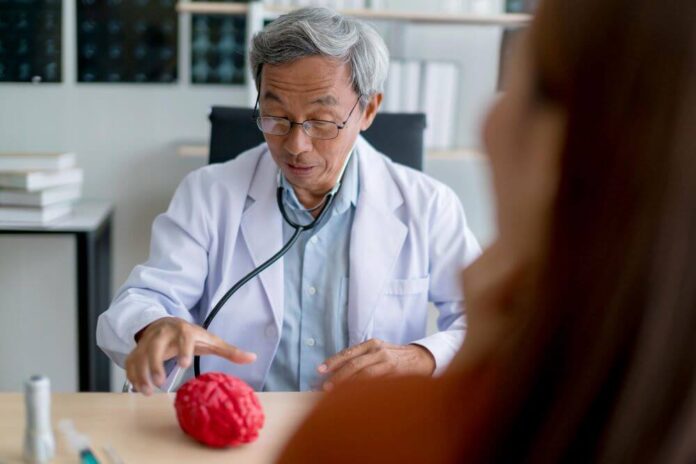

A Stroke Center is an extremely specialized healthcare facility able to provide prompt diagnosis, emergency treatment and rehabilitation of stroke patients. As stroke is the most time-sensitive illness, immediate therapy determines survival and recovery outcomes. Stroke Centers are becoming the new norm in healthcare delivery, as they are capable of providing neurologists, emergency doctors, radiologists and rehab specialists working seamlessly together to make the best use of every second in the patient’s treatment timeline.
One of the leading healthcare institutions offering comprehensive stroke treatment is Liv Hospital. Liv Hospital uses the multidisciplinary approach for neurological emergencies.
What Makes a Stroke Center Different?
In contrast to general emergency departments, a Stroke Center is a place solely dedicated to providing treatment for brain attacks with the utmost speed and accuracy. Their aim is to minimize the time patients have to wait from their arrival to getting treated.
Stroke centers have available:
- State-of-the-art brain imaging systems (CT, MRI)
- Stroke response teams available round the clock
- Expert neurologists and neurosurgeons
- Ready availability of life-saving procedures
This type of arrangement not only facilitates the making of prompt decisions but also results in enhanced patient outcomes.
Types of Stroke and Why Fast Action Matters
There are two primary kinds of strokes:
- Ischemic stroke: triggered by a blood clot that causes a blood supply interruption to the brain
- Hemorrhagic stroke: occurs due to a rupture of blood vessels in or around the brain
Each of them needs totally different therapies, so correct and quick diagnosis is essential. With every minute delay in treatment, the extent of brain damage that cannot be restored is increasing.
Key Functions of a Modern Stroke Center
A fully-equipped Stroke Center is capable of delivering several vital services:
Emergency Stroke Response
Only a dedicated team who are committed to being ready at a moment’s notice will be able to respond immediately when a stroke patient is brought in.
Rapid Imaging and Diagnosis
Brain imaging is done immediately to ascertain the type of stroke as well as its severity.
Interventional Treatments
Methods like clot extraction (mechanical thrombectomy) are employed to reestablish blood supply in the brain in ischemic strokes.
Intensive Care and Monitoring
Severely ill patients stay under constant observation in intensive care units to keep their health stable.
Rehabilitation Services
Physical, occupational, and speech therapies help patients regain their strength and abilities early on during the recovery process.
The Role of Advanced Multidisciplinary Care
Effective stroke treatment today relies on collaboration among various medical specialties. Therefore, department coordination becomes vital for a patient’s survival and rehabilitation at this point in time.
This institution combines emergency services, neurology, imaging, and therapy within one harmonious operation. Besides managing a stroke the patient-direct care does the secondary gesture release the patient lead through a state of.
Early Warning Signs You Should Never Ignore
Knowing stroke symptoms can be a matter of life and death. Some typical signs are:
- Sudden numbness or weakness in the face, arm, or leg, especially on one side of the body
- Confusion, trouble speaking or understanding speech
- Sudden trouble seeing in one or both eyes
- Sudden trouble walking, dizziness, loss of balance or coordination
- Severe headache with no known cause
The FAST method is an easy mnemonic to get the right thing:
- Face drooping
- Arm weakness
- Speech difficulty
- Time to call emergency services immediately
Rehabilitation and Long-Term Recovery
Emergency stroke care is one thing, but it doesn’t mean that your journey towards recovery is over! Most individuals still depend on ongoing rehabilitation for their needs, which might involve:
- Physical therapy to recover motor skills
- Speech therapy to facilitate better communication
- Occupational therapy for daily activities
- Provision of support through counseling
Starting rehabilitation soon after a stroke has been shown to have better results and increase the chance of being independent.
Conclusion
A Stroke Center forms an indispensable cog of the healthcare wheel nowadays. Such centers render immediate and specialized care to one of the deadliest medical emergencies. Employing rapid response teams, advanced diagnostic tools, and comprehensive care strategies, these centers help enhance patients’ chances of survival and recovery.
Facilities offering stroke care like Liv Hospital highlight – by their example – the significance of organizing treatment for stroke in a systematic manner. Their proficiently-staffed Stroke Center illustrates how multidisciplinary teamwork can lead to better patient results and facilitate complete recovery paths.