
Who isn’t intrigued by a fierce and fearless woman charting her path in a world dominated by men? Enter Fantina Polo, the second daughter of the legendary explorer Marco Polo! Her story is brimming with bold moves, groundbreaking contributions, and exciting insights that offer more than their fair share of jaw-dropping moments. Are you ready for a whirlwind of historical excitement? Buckle up!
Who is Fantina Polo?
Fantina Polo—the name might not ring a bell immediately, but this remarkable woman certainly deserves the limelight. Born in 1303 under the vibrant Italian sky, Fantina was the second daughter of Marco Polo and Donata Badoer. You could say she was born into greatness, as her father was the world-renowned traveler who opened up tantalizing stories of the Far East to Europe. But here’s the thing: Fantina carved out her own niche that ensured her fame was more than just inherited.
Her birth was a momentous occasion not just because of her notable family but also because she grew into a formidable force that would shape her own story. It’s captivating, right? Fantina wasn’t someone who would just bask in the reflected glory of her father; she had her plans and ambitions.
Family Behind the Fame
Ah, family—the backbone of all great tales. Fantina was the second of three daughters in the Polo family. Her elder sister, Bellela, and younger sister, Moreta, together formed the trio that was pivotal in carrying forward Marco Polo’s remarkable legacy. Picture this: a house filled with stories of far-flung lands and exotic spices, all igniting ambitions and dreams among the Polo sisters.
Their parents, Marco Polo and Donata Badoer, married in 1300, and instantly became the “it” couple of their time. Donata, a woman of her own charm and intelligence, balanced Marco’s globetrotting tales with her elegance and wisdom. Fantina, raised by such iconic figures, wasn’t just another child in the Polo household. She was encouraged to think, explore, and protect what her family stood for.
Family gatherings in that home? Probably less about idle chit-chat and more about planning their next strategic move. After all, with a dad like Marco Polo, dinner talks were likely state-of-the-world addresses!
Marriage to Marco Bragadin
While her birth and family provided the initial push, Fantina’s life took on a new dimension when she married Marco Bragadin. Now, you may wonder, “Why is this important?” Well, Fantina’s marriage was more than an exchange of vows; it was a gateway to Venetian nobility, a significant step that aligned her with social and financial powerhouses.
Marco Bragadin wasn’t just another nobleman; he belonged to a respectable Venetian family. This union was strategic, strengthening ties and furthering family interests in the broader Venetian political and social landscape. To put it in today’s terms, it was a kind of power couple arrangement that films are made of.
The marriage to Bragadin might sound straight out of an 80s soap opera but think of it as more of an historical alliance than a romantic comedy. They weren’t just spouses—they were two individuals united in their quest for influence and affluence. Talk about a partnership made in strategic heaven!
Champion of Family Interests
Fantina Polo emerges as a gallant protector of family interests, making her a figure of substantial influence. Let’s say you’re faced with the task of preserving your family legacy and wealth in a time when women were seen as mere extensions of their husbands and fathers—what would you do? If you’re Fantina, you roll up your sleeves, march into the courtroom, and demand what’s rightfully yours!
After her father passed away in January 1324, Fantina didn’t just sit and mourn. Nope, she jumped right into action. She took legal action to ensure her inheritance—and that of her sisters—was upheld. This act alone set her apart, showcasing a fearless determination to stand toe-to-toe with the best legal minds of her time.
Fantina was no passive heir. She was an assertive woman who believed in the power of legal rights, at a time when “woman” and “legal prowess” were rarely mentioned in the same breath. Fantina’s dogged determination was something akin to the suspenseful climax of a legal thriller. She embodied grit and eloquence, showing that determination can indeed turn the tide in your favor.
Executor of Marco Polo’s Will
Taking a giant leap forward, Fantina’s role as co-executor of her father’s will was significant, a monumental responsibility for any woman during her time. Marco Polo entrusted his estate to the capable hands of his wife and daughters, an indication of his immense trust in Fantina.
This was no small feat. Fantina, her sisters, and their mother were charged with managing the entire Polo estate—a combination of properties, rights, and the intricate responsibilities that managing such an estate required. Imagine being given the keys to a kingdom and having to make sure every iota works seamlessly without letting it crumble.
Fantina’s role here was pivotal, challenging the norms and rewriting what responsibility looked like for women. While women today hold titles of executives and CEOs, back in the 14th century, Fantina’s role as an executor was nothing short of groundbreaking. It’s like having Hercules’ strength in the realm of estate management—the intricacies, the balancing acts, and above all, making decisions that would sustain their family for generations.
Success in Cartography
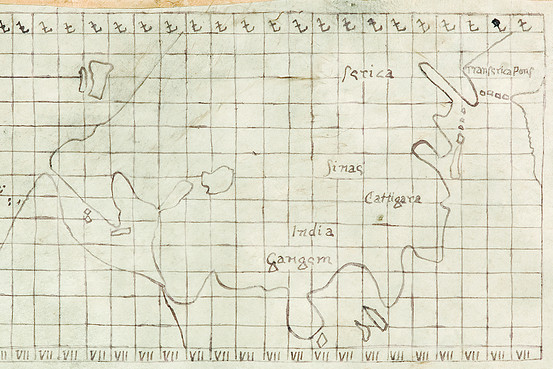
Ever wonder what it takes to contribute to something as monumental as mapping out the world? Two words: Fantina’s ingenuity. Fantina and her sister Moreta found themselves delving into cartography—a field that was as exotic and challenging as it was essential.
Picture them, leaning over parchments, scribing intricate lines, with the Ptolemaic grid lines reflecting their understanding of geography that was ahead of its time. Their work in map creation wasn’t hobby-level tinkering; it was advanced, showcasing a sophisticated grasp of geography and navigation.
These maps that have been signed by Fantina and Moreta are more than just cartographic representations; they signify a contribution that has potentially guided exploration and discovery. How amazing is that? When you visualize explorers setting out to the unknown, propelled by these very maps, it gives credence to Fantina’s lasting influence. Her contribution to cartography is a testament to her vision of looking beyond the horizons—literally!
Fantina’s Lasting Impact
The magic of Fantina Polo’s life springs from her unique ability to shape her destiny in a world driven by unyielding rules and norms. Her vibrant contribution to the Polo legacy is undeniable and far-reaching—from safeguarding family wealth, ensuring rightful inheritances, and shaping the estate’s future to forging a new path in cartography.
One of Fantina’s most striking impacts was her role in charting new territories—both figuratively and literally. In a time when women were seldom seen as leaders or navigators of their own futures, Fantina stood firm, wielding her influence like a torch, illuminating the voyages of explorers and the path for women in leadership.
And here’s where it gets even more exciting! If you’re captivated by tales of extraordinary individuals leaving memorable legacies—and who isn’t?—Fantina Polo’s story feeds that hunger with every turn. Her life reaffirms the idea that courage, gumption, and a touch of genius can carve out indelible marks in history. So, the next time you come across stories of incredible adventurers and their fearless offspring, remember Fantina Polo—an unsung heroine whose life stands as a beacon of boldness.
Well, if I’ve piqued your interest, you might want to learn more about formidable women who’ve boldly stridden across history. Click here for more riveting tales that blend history with the audacity of remarkable women!