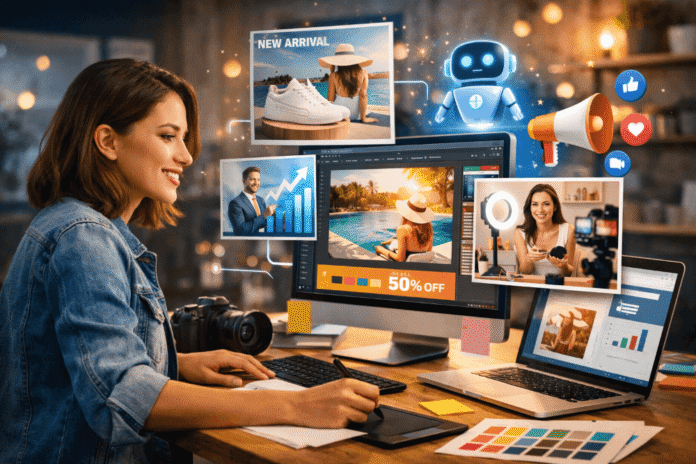

Marketing teams today face a visual overload problem. Every minute, thousands of images are uploaded to social platforms, and audiences scroll past most of them in seconds. According to Statista, global social media ad spending continues to grow year after year, intensifying competition for attention. That means your brand visuals cannot look generic or recycled.
If you want to stand out without hiring a full design team, you need faster and smarter ways to create custom visuals. The good news is that AI-powered workflows now allow you to generate high-resolution images, maintain brand consistency, and move from concept to campaign in minutes. This guide shows you practical hacks to create custom images for marketing that help you capture attention and support upscaling a Business in competitive markets.
How can you quickly generate custom marketing images?
You can quickly generate custom marketing images by combining AI image generation with an integrated video workflow, maintaining brand aesthetics, and iterating visuals based on campaign data.
Instead of designing every image from scratch, you use prompts, references, and built-in editing tools to create on-brand visuals in seconds. When image creation connects directly to your broader content pipeline, you reduce delays and improve consistency across ads, landing pages, and social posts.
Modern tools allow you to:
- Generate multiple variations from one idea
- Edit visuals using simple text instructions
- Maintain consistent characters and brand colors
- Export in high resolution for ads and banners
This approach shifts image creation from a design bottleneck to a scalable marketing asset.
Why does custom imagery matter in Marketing campaigns?
Custom imagery improves recognition, trust, and conversion rates by aligning visuals with your brand voice and audience intent.
Stock photos often dilute brand identity. When you use tailored visuals, your audience recognizes patterns in colors, characters, and storytelling style. That familiarity builds trust over time.
Strong visuals drive measurable results
Research consistently shows that content with relevant images receives significantly higher engagement compared to text-only posts. Visual consistency also supports recall, which influences purchase decisions.
When your campaign visuals reflect your offer clearly, you reduce friction in the buyer journey. This is especially important in:
- Paid social campaigns
- Product launches
- Email marketing headers
- Website hero sections
Custom imagery supports clarity. Clarity supports conversion.
How can AI tools simplify image creation?
AI image generation turns ideas into visuals through text prompts and references, reducing the need for manual design steps.
You describe the scene, style, and mood. The system generates multiple high-resolution options within seconds. You then refine the image with small adjustments instead of starting over.
From text or image references to visual in minutes
Inside invideo, the model known as Seedream enables marketers to generate and edit images within the same workflow used for video production. Because invideo integrates Seedream directly into its platform, your visuals remain aligned with scripts, voiceovers, and campaign narratives. This tight connection helps you move from static graphics to dynamic content using video making apps without rebuilding assets or compromising visual consistency.
By keeping image generation inside the same ecosystem, you:
- Avoid exporting and reformatting files
- Maintain resolution and layout consistency
- Test multiple variations for A B comparisons
This workflow is especially valuable when you are managing multiple campaigns simultaneously.
What are practical hacks to speed up the workflow?
You can cut production time by reusing prompts, creating brand kits, and generating batches of visuals at once.
Efficiency comes from structure. When you systemize your creative process, AI becomes a multiplier rather than a distraction.
Build a reusable brand prompt library
Document your:
- Brand colors in hex codes
- Preferred lighting styles
- Character descriptions
- Background environments
Reusing structured prompts ensures consistent output across campaigns.
Use batch generation for experimentation
Instead of generating one image at a time, create five to ten variations. Then compare which visuals perform better in ads or organic posts.
This allows you to apply data-driven marketing principles directly to image design.
Edit with instructions, not software panels
Modern AI tools let you adjust lighting, remove objects, or restyle backgrounds using natural language. This reduces dependency on complex design interfaces and shortens approval cycles.
How do visuals connect to long-term brand growth?
Consistent visuals reinforce positioning and support upscaling a Business over time.
When you create a recognizable visual identity across social posts, landing pages, and video thumbnails, you build mental availability. Over months, this recognition compounds.
Consistency builds authority
If your campaigns feature recurring characters, similar compositions, or unified color themes, your audience starts associating that style with your expertise.
Visual systems also improve internal efficiency. Your marketing, management, and design teams align around shared assets rather than recreating materials for each department.
How can you turn images into complete campaigns?
Images become more powerful when integrated into a broader storytelling strategy that includes video, ads, and educational content.
Rather than treating visuals as standalone graphics, you connect them to scripts, hooks, and calls to action.
Bridge static and video storytelling
When your images are created inside an ecosystem that also supports video assembly, you can:
- Convert product visuals into short-form ads
- Turn blog graphics into explainer clips
- Repurpose social visuals into presentation slides
This integration strengthens your content ROI. One visual concept can power multiple channels, including social feeds, email campaigns, and paid promotions.
Frequently Asked Questions
1. Are AI-generated marketing images suitable for paid ads?
Yes, as long as the images meet platform specifications and reflect your brand guidelines. High-resolution outputs and clear messaging make them appropriate for paid campaigns. Always test variations to identify which visuals produce stronger click-through and conversion rates.
2. How do I maintain brand consistency with AI tools?
You maintain consistency by using structured prompts, predefined brand colors, recurring characters, and reference images. Saving and reusing prompt workflows ensures that future campaigns align visually with earlier assets.
3. Can small businesses benefit from AI image generation?
Absolutely. Small teams often lack full design departments. AI tools reduce production costs and accelerate output, helping entrepreneurs compete visually with larger brands while focusing resources on strategy and growth.
4. Does custom imagery really affect conversion rates?
Relevant and clear visuals improve engagement and help communicate value faster. When prospects instantly understand what you offer, they are more likely to continue through the buyer journey.
5. How often should I refresh campaign visuals?
Review performance data every few weeks in active campaigns. If engagement declines, experiment with new compositions, lighting styles, or backgrounds while maintaining core brand elements.
Conclusion
Custom visuals are no longer optional in modern Marketing. They influence how quickly your audience understands your offer and whether they remember your brand.
By integrating AI-powered image generation with structured workflows, you reduce production time and increase creative control. Use reusable prompts, batch experimentation, and unified platforms to maintain consistency across campaigns.
Start by auditing your current visual assets. Identify gaps in consistency. Then implement a streamlined AI workflow that connects image generation to your broader content strategy. Over time, this disciplined approach will strengthen brand recognition, improve engagement metrics, and support sustainable business growth.